What is a gypsum partition wall?
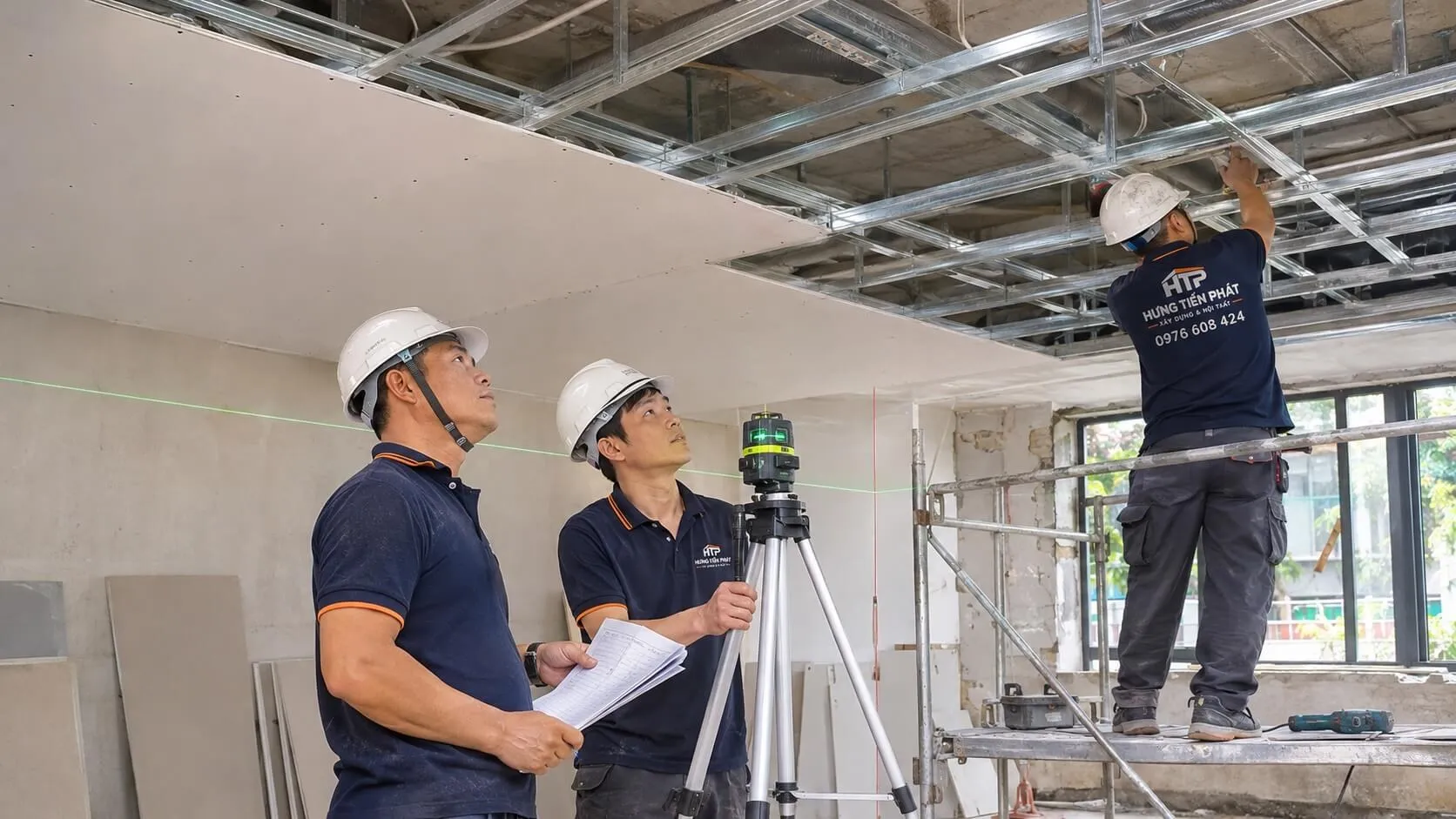
A gypsum partition consists of a steel frame (usually galvanised) with gypsum boards fixed to one or both sides. The cavity between the two faces can be left empty or filled with soundproofing material. Once the joints are treated, the surface is skim-coated and painted like an ordinary wall.
Basic build-up of a double-sided partition
- Frame: set out the position and fix the floor and vertical channels to the correct levels.
- First face: screw the gypsum boards to the frame.
- Services or soundproofing: run electrical cables inside the wall and add mineral wool or equivalent where needed.
- Second face: close the wall with the second layer of boards.
- Joint treatment, skim coat and paint to finish.
A single-sided wall lining is fixed against an existing wall to flatten it, hide cables or create a feature.
Benefits of gypsum partition walls
- Faster to build, with less dust and noise than brickwork.
- Lightweight, so less load on floors and structure.
- Flexible: easy to change or adjust the layout when needs change.
- Neat routing for electrical and network cables inside the wall.
- Can be combined with soundproofing, moisture resistance and fire resistance using suitable boards and materials.
- A flat surface that is easy to finish with paint.
Limitations to keep in mind
- Not a load-bearing structure, so it cannot replace a load-bearing wall.
- Heavy items such as cabinets, shelves and large TVs need a reinforced frame or special fixings.
- Areas with direct water contact need moisture-resistant boards and suitable waterproofing.
- Sound insulation depends on the build-up, the joints and how gaps are sealed.
Common types of gypsum partition
| Type | Characteristics | Commonly used for |
|---|---|---|
| Single-sided lining | Fixed against an existing wall to flatten it and hide cables | TV walls, feature walls, wall refurbishment |
| Double-sided partition | Frame with boards on both sides, optional soundproofing | Dividing rooms, meeting rooms, offices |
| Moisture-resistant | Moisture-resistant boards with waterproofing | Bathrooms, kitchens, wet areas |
| Fire-resistant | Fire-resistant boards to the project’s requirements | Corridors, storage, public spaces |
| Soundproof | Multiple board layers with soundproofing fill | Bedrooms, meeting rooms, entertainment rooms |
When should you use a gypsum partition?
- Dividing offices and meeting rooms.
- Separating a bedroom or home workspace inside an apartment.
- Building walls that hide cables, TV walls or decorative walls.
- Renovations that need fast work with little dust and noise.
Tips for building gypsum partitions
- Survey electrical, plumbing and air-conditioning positions before fixing the layout.
- Choose the right boards and frame: standard, moisture-resistant, fire-resistant or soundproof.
- Decide in advance where heavy items will hang so the frame can be reinforced.
- Follow the proper process for joints, skim coat and paint to avoid cracks and visible joints.
- Finish the base and junction gaps carefully to improve sound insulation and appearance.
Frequently asked questions
Are gypsum partition walls good for soundproofing?
Sound insulation depends on the build-up: the number of board layers, the fill inside and how gaps are sealed. If good soundproofing matters, state it early so the build-up can be advised accordingly.
Can I mount a TV on a gypsum wall?
Yes, but reinforce the frame or use special fixings from the start of construction to keep it safe.